 Guv's Gardens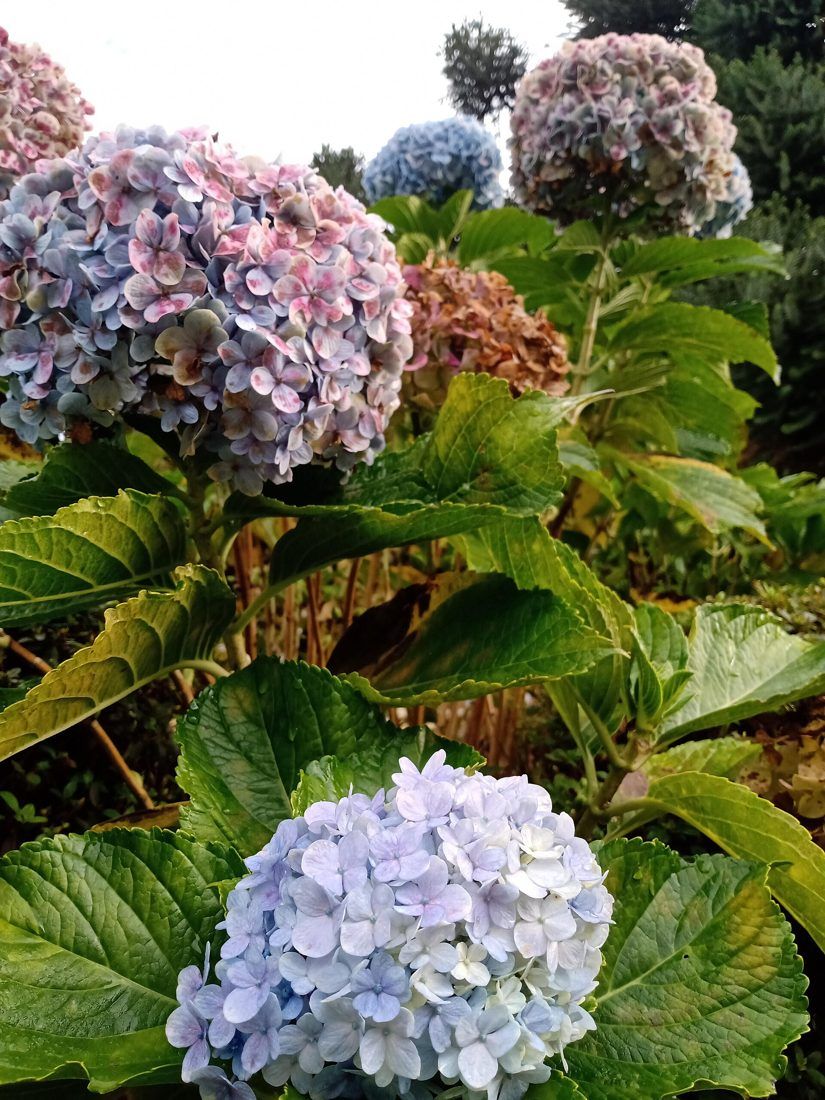
Photo: Hedestad, CC BY-SA 4.0, via Wikimedia Commons
_3.jpg)
- Sun
- Partial shade: morning sun with afternoon shade. Avoid hot, exposed sites
- Soil
- Moist, well-drained soil high in organic matter
- Soil pH
- 5.0-5.5 for blue flowers; 6.0 or above for pink. Tolerates acid to alkaline soil
- Water
- High. Water deeply every week, or more often in heat
- Hardiness
- USDA zones 6-9. Grows in zone 5 but usually does not flower there, except reblooming cultivars
- Height and spread
- 3-6 ft x 3-6 ft
Guv's tipBigleaf hydrangea blooms on old wood, so prune right after flowering in summer, before August 1. Any later and you lose next year's flowers.
Through the year
When to plant
Fall before the first frost (preferred) or spring after the last frost
Harvest or flowering
Jun-Aug
Pruning
Blooms on old wood: prune right after flowering in summer, before Aug 1
Making more plants
Layering, division, or stem (softwood) cuttings
Watch out for
Aphids
Look for: Clusters of soft insects, sticky honeydew, curled leaves
What to do: Hose off; insecticidal soap; conserve lady beetles
Cercospora leaf spot
Cercospora spp. (C. hydrangeae)Look for: Purple-brown leaf spots on lower leaves
What to do: Remove fallen leaves, drip irrigation, labeled fungicide
Powdery mildew
Powdery mildew fungi (Golovinomyces or Erysiphe spp.)Look for: White powdery coating on leaves
What to do: Air circulation, resistant cultivars; labeled fungicide if severe
Always read and follow the label on any treatment, and check it is approved for use where you live.
Safety and spread
Pets and people: Contains a cyanogenic glycoside. Causes vomiting, diarrhea and depression in dogs, cats and horses; low severity (ASPCA, NC State Extension)
Weed risk: None known
Growing somewhere else? See this plant for the UK and Australia.
The Plant Doctor and the Guv's book
Printable pest and disease charts with real photographs, and all 50 USA plants in one book.