 Guv's Gardens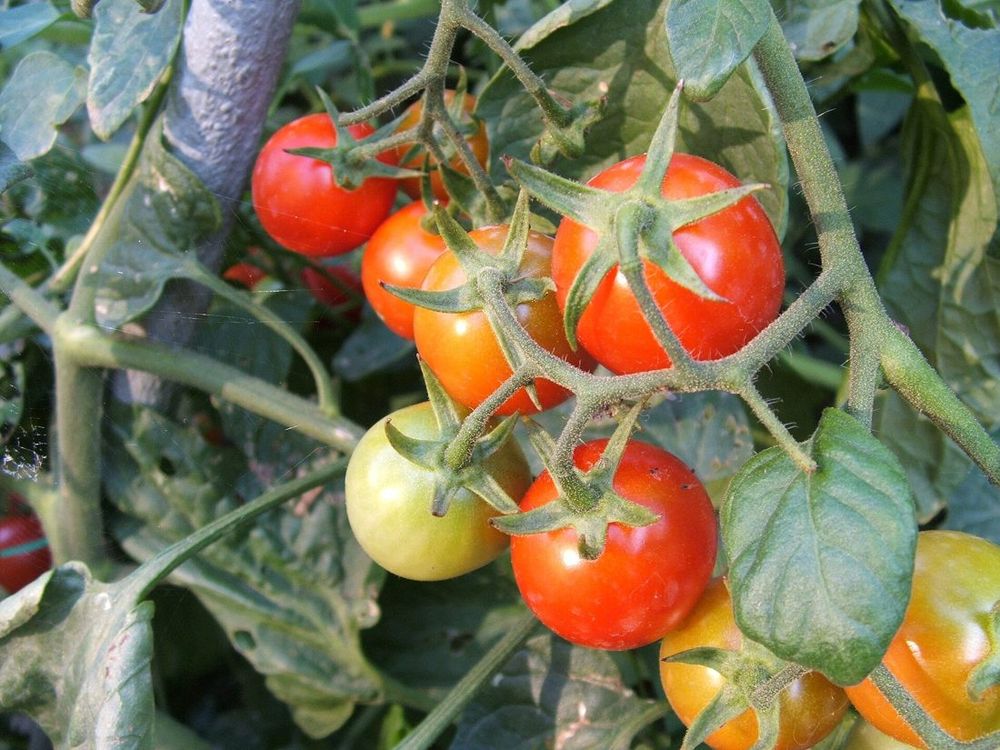
Photo: Luigi Chiesa, CC BY-SA 3.0, via Wikimedia Commons

- Sun
- Full sun
- Soil
- Rich, free-draining, moisture-retentive
- Soil pH
- Slightly acid to neutral, about pH 5.5-7.5
- Water
- Steady, regular watering. Irregular watering causes splitting and blossom end rot
- Hardiness
- Tender (frost-tender). Needs frost protection: grow under cover or plant out after frosts
- Height and spread
- Cordons commonly 1.5-2m or more; bush and tumbling types are compact. Overall range 0.3-3m tall

Guv's tipWater your tomatoes steady and regular, mind. Irregular watering is what causes splitting and blossom end rot. Trust me on this one.
Through the year
Timings are for the UK as a whole. Northern and exposed gardens often run a couple of weeks later.
When to plant
Sow indoors late Feb-mid Mar (greenhouse crops) or late Mar-early Apr (outdoor crops). Plant out late May-early Jun once reliably above 16°C
Harvest or flowering
Harvest Jul-Oct
Pruning
Cordons: remove side shoots and stop the main stem after 4-7 trusses outdoors. Bush types need no side-shooting
Making more plants
Seed
Watch out for
Glasshouse whitefly
Look for: Tiny white flying insects under leaves, honeydew and sooty mould
What to do: Yellow sticky traps, biological control Encarsia formosa under glass
Tomato blight
Phytophthora infestansLook for: Brown patches on leaves and stems, fruit rots, rapid collapse in wet summers
What to do: Remove affected plants, grow under cover or use blight-resistant cultivars
Grey mould
Botrytis cinereaLook for: Fuzzy grey mould on flowers, fruit or stems, rotting
What to do: Remove affected parts, improve ventilation, avoid overcrowding
Blossom end rot
Physiological (calcium deficiency from irregular watering)Look for: Dark sunken patch at fruit base
What to do: Water consistently
Always read and follow the label on any treatment, and check it is approved for use where you live.
Safety and spread
Pets and people: Leaves and stems are toxic to dogs, cats and horses (solanine); ripe fruit is non-toxic, according to the ASPCA. Leaves and stems are poisonous to humans, medium severity
Weed risk: None known
Growing somewhere else? See this plant for the USA and Australia.
The Plant Doctor and the Guv's book
Printable pest and disease charts with real photographs, and all 50 UK plants in one book.