 Guv's Gardens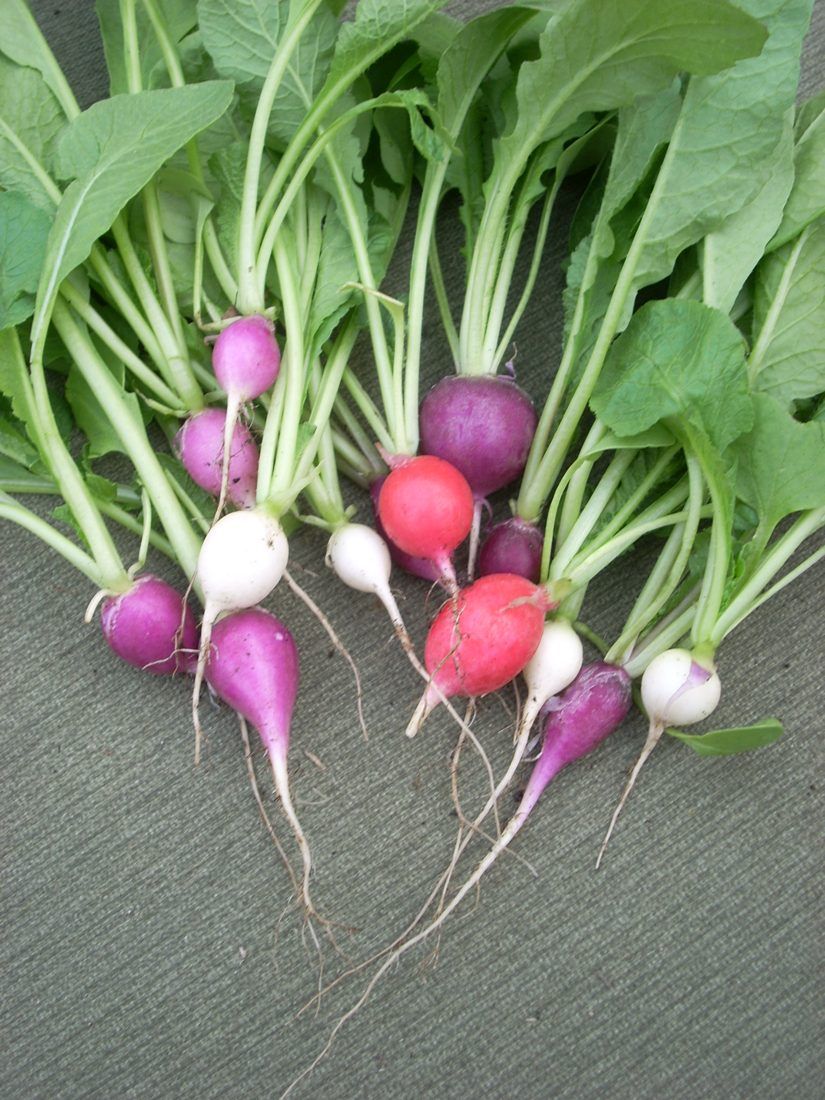
Photo: Self, en:Jengod, Public domain, via Wikimedia Commons

- Sun
- Full sun (tolerates part shade, but roots size up more slowly)
- Soil
- Loose, well-drained loamy or sandy soil
- Soil pH
- About 6.0-7.0 (neutral)
- Water
- About 1 in per week, with even moisture. Stress gives hot, woody or cracked roots
- Hardiness
- Cool-season annual (USDA zones 2-9). Bolts in heat
- Height and spread
- Garden radish foliage 4-12 in x 2-4 in; large (daikon) types and bolting plants can reach 3 ft

Guv's tipRadishes are quick: harvest 3-6 weeks after sowing. Keep moisture even, or stress gives you hot, woody or cracked roots.
Through the year
Months are a rough guide. Time it by your own frost dates.
When to plant
Spring: Minnesota early Apr-early May, North Carolina mid Feb-early Apr, South Carolina coast Jan-Feb. Fall: Minnesota Aug, North Carolina Aug-mid Sep, South Carolina Sep-Oct/Nov. Sow every 1-2 weeks
Harvest or flowering
Harvest 3-6 weeks after sowing (spring and fall)
Pruning
Thin to 1-3 in apart (4-6 in for large types)
Making more plants
Seed, sown direct
Watch out for
Flea beetles
Look for: Small round shot-holes in leaves, worst in early spring
What to do: Row covers over seedlings; remove crop debris
Cabbage maggot
Look for: White maggots tunnel and groove roots; plants yellow, wilt or stunt
What to do: Floating row covers before adult flies emerge (not on previously infested soil); rotate crops; remove plant roots after harvest
Clubroot
Plasmodiophora brassicaeLook for: Swollen, stunted roots; wilting
What to do: Raise soil pH, long rotation away from brassicas
Black rot
Xanthomonas campestris pv. campestrisLook for: Yellow V-shaped lesions at leaf edges
What to do: Clean seed, rotation, remove debris
Always read and follow the label on any treatment, and check it is approved for use where you live.
Safety and spread
Pets and people: Low toxicity. May cause mild skin irritation (isothiocyanate). Radish roots are safe for dogs in small amounts. Not listed by the ASPCA
Weed risk: Not on the federal noxious weed list. The USDA PLANTS database shows no federal or state noxious or invasive status
Growing somewhere else? See this plant for the UK.
The Plant Doctor and the Guv's book
Printable pest and disease charts with real photographs, and all 50 USA plants in one book.