 Guv's Gardens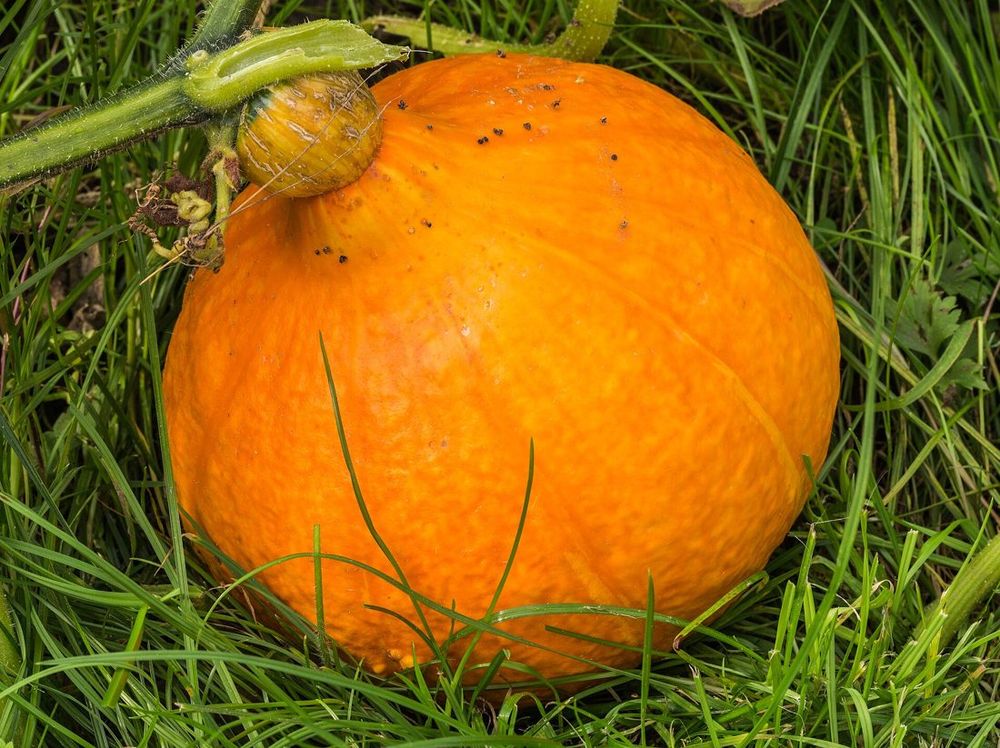
Photo: Agnes Monkelbaan, CC BY-SA 4.0, via Wikimedia Commons
.jpg)
- Sun
- Full sun
- Soil
- Rich, well-drained soil
- Soil pH
- About 6.0-6.8
- Water
- At least 1 in per week; up to 2 in per week in the 30 days before harvest
- Hardiness
- Frost-tender warm-season annual. Sow when the soil is 65°F or warmer, after danger of frost
- Height and spread
- Long running vines needing about 50-150 sq ft per hill, with rows 6-15 ft apart. Bush types are more compact

Guv's tipWant bigger pumpkins? Remove early female flowers or extra fruit. Harvest before a hard frost, when the rind is hard and the color solid.
Through the year
Months are a rough guide. Time it by your own frost dates: after last frost (warm season).
When to plant
Sow direct after frost in warm soil: late May-early Jun in the North, to early Jul in the far South, for October pumpkins
Harvest or flowering
Flowers in summer. Harvest late Sep-Oct, before a hard frost, when the rind is hard and the color solid
Pruning
Optional: remove early female flowers or extra fruit for larger pumpkins. Vines may be trained along rows
Making more plants
Seed
Watch out for
Squash bug
Look for: Wilting, speckled leaves; clusters of bronze football-shaped eggs under leaves
What to do: Hand-pick adults, nymphs and egg masses; trap under boards; protect young plants
Squash vine borer
Look for: Sudden wilting of runners, sawdust-like frass at stem base
What to do: Row covers until flowering (not where cucurbits grew last year); slit stem and remove larvae, cover with soil; timed insecticide
Powdery mildew
Podosphaera xanthiiLook for: White powdery patches starting on older leaves
What to do: Resistant varieties, air circulation; labeled fungicide if severe
Downy mildew
Pseudoperonospora cubensisLook for: Angular yellow spots on upper leaf, gray-purple growth beneath
What to do: Labeled protectant fungicide; avoid overhead watering
Always read and follow the label on any treatment, and check it is approved for use where you live.
Safety and spread
Pets and people: Non-toxic to cats, dogs and horses (NC State Extension). Plain pumpkin is safe for dogs
Weed risk: Not on the federal noxious weed list. The USDA PLANTS database shows no federal or state noxious or invasive status
Growing somewhere else? See this plant for the UK and Australia.
The Plant Doctor and the Guv's book
Printable pest and disease charts with real photographs, and all 50 USA plants in one book.