 Guv's Gardens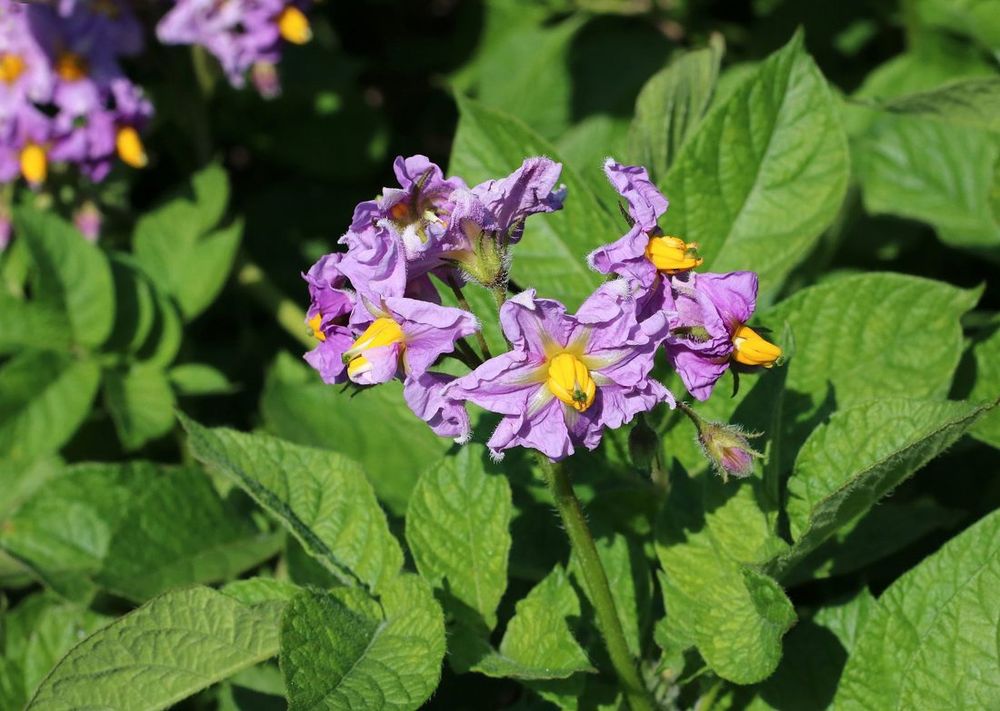
Photo: George Chernilevsky, Public domain, via Wikimedia Commons

- Sun
- Full sun
- Soil
- Loose, well-drained, sandy or light soil. Poor drainage causes tuber rot
- Soil pH
- 5.8-6.5 is ideal; tolerates about 5.0. Keeping the pH around 5.0-5.3 reduces scab
- Water
- About 1 in per week, soaking once or twice a week. Even moisture is critical when plants bloom and tubers form
- Hardiness
- Cool-season crop grown as an annual (USDA zones 2-11). Tolerates light frost
- Height and spread
- 1-3 ft tall x 1-3 ft wide

Guv's tipHill soil around potato stems once plants are about a foot tall, and repeat once or twice. That's how you prevent green tubers.
Through the year
Months are a rough guide. Time it by your own frost dates.
When to plant
Plant seed pieces as the soil warms in early spring: South Carolina coast Feb-Mar, South Carolina Piedmont mid Mar-Apr, North Carolina mid Feb-Mar, Minnesota early Apr-May
Harvest or flowering
New potatoes 7-8 weeks after planting. Main crop 100-120 days; dig about 2 weeks after the vines die
Pruning
None. Hill soil around the stems (start when plants are about 1 ft tall and repeat 1-2 times) to prevent green tubers
Making more plants
Certified seed potatoes cut into 1-2 in pieces, each with an eye, and cured for a few days before planting
Watch out for
Colorado potato beetle
Look for: Yellow-orange egg masses under leaves; striped adults and red-orange larvae defoliate plants
What to do: Hand-pick and crush eggs, row covers, rotation; Bt formulations / spinosad (resistance common)
Flea beetles
Look for: Tiny shot-holes in leaves
What to do: Usually tolerable; remove weeds and residue, row covers
Late blight
Phytophthora infestans (water mold)Look for: Brown, water-soaked leaf lesions, rapid collapse in cool wet weather; discolored rotting tubers
What to do: Certified seed, resistant varieties, remove infected plants and volunteers; protectant fungicide
Common scab
Streptomyces spp. (mainly S. scabies)Look for: Rough, corky scabs on tuber skin (tubers still edible)
What to do: Keep pH low (about 5.0-5.3), even moisture at tuber set, rotation, resistant varieties, clean seed
Always read and follow the label on any treatment, and check it is approved for use where you live.
Safety and spread
Pets and people: Green tubers, sprouts, leaves and fruit contain solanine. NC State Extension rates this high severity (may be fatal), and the University of California lists the green parts as highly toxic. Green portions are poisonous; avoid giving dogs green potatoes (plain cooked potato is OK). Not listed by the ASPCA
Weed risk: Not on the federal noxious weed list. The USDA PLANTS database shows no federal or state noxious or invasive status
Growing somewhere else? See this plant for the UK.
The Plant Doctor and the Guv's book
Printable pest and disease charts with real photographs, and all 50 USA plants in one book.