 Guv's Gardens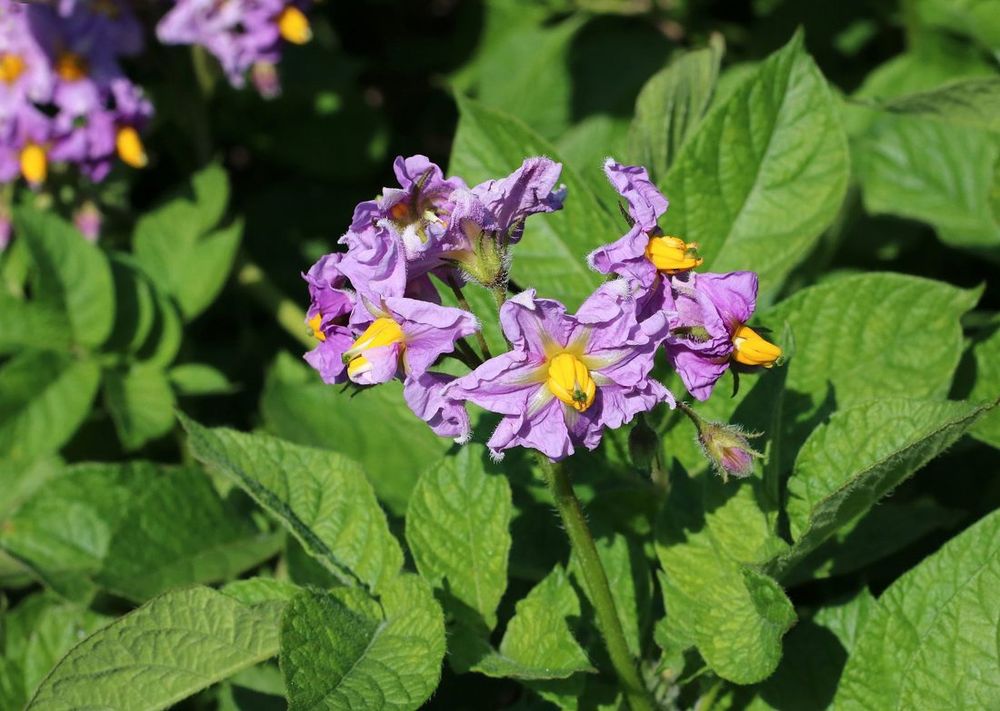
Photo: George Chernilevsky, Public domain, via Wikimedia Commons

- Sun
- Full sun
- Soil
- Fertile, well-drained, deeply dug
- Soil pH
- Acid to slightly acid, about pH 4.8-6.5. Acid soil reduces common scab
- Water
- Water regularly, especially when tubers form
- Hardiness
- Tender foliage is damaged by frost. Plant tubers after hard frosts and earth up or protect shoots
- Height and spread
- 60-90cm tall
Guv's tipChit your seed potatoes from late winter, then earth up the stems as they grow. It helps protect the tubers from blight, too.
Through the year
Timings are for the UK as a whole. Northern and exposed gardens often run a couple of weeks later.
When to plant
Chit from late winter. Plant first earlies from mid/late Mar, maincrops late Apr-early May. Cold-stored seed potatoes Jul-early Aug under cover for a Christmas crop
Harvest or flowering
First earlies Jun-Jul, second earlies Jul-Aug, maincrop Aug-Oct
Pruning
None; earth up stems
Making more plants
Certified seed tubers, chitted before planting
Watch out for
Slugs and snails
Look for: Irregular holes in leaves, slime trails, seedlings eaten
What to do: Hand-pick at night, barriers, beer traps, encourage predators; ferric phosphate pellets sparingly
Wireworms
Look for: Narrow holes and tunnels in tubers
What to do: Lift crops promptly; problem worst on land recently grass
Potato blight
Phytophthora infestansLook for: Brown leaf lesions with white fungal growth, foliage collapse, tuber rot
What to do: Grow resistant cultivars, cut off foliage when infected, earth up to protect tubers
Plant viruses
VariousLook for: Mottling, streaking, stunting
What to do: Destroy affected plants, control vectors
Always read and follow the label on any treatment, and check it is approved for use where you live.
Safety and spread
Pets and people: Green tubers, leaves, stems and fruits contain solanine and other alkaloids and are poisonous. Not on the ASPCA list
Weed risk: None known. Potato cyst nematode and ring rot are notifiable, regulated pests
Growing somewhere else? See this plant for the USA.
The Plant Doctor and the Guv's book
Printable pest and disease charts with real photographs, and all 50 UK plants in one book.