 Guv's Gardens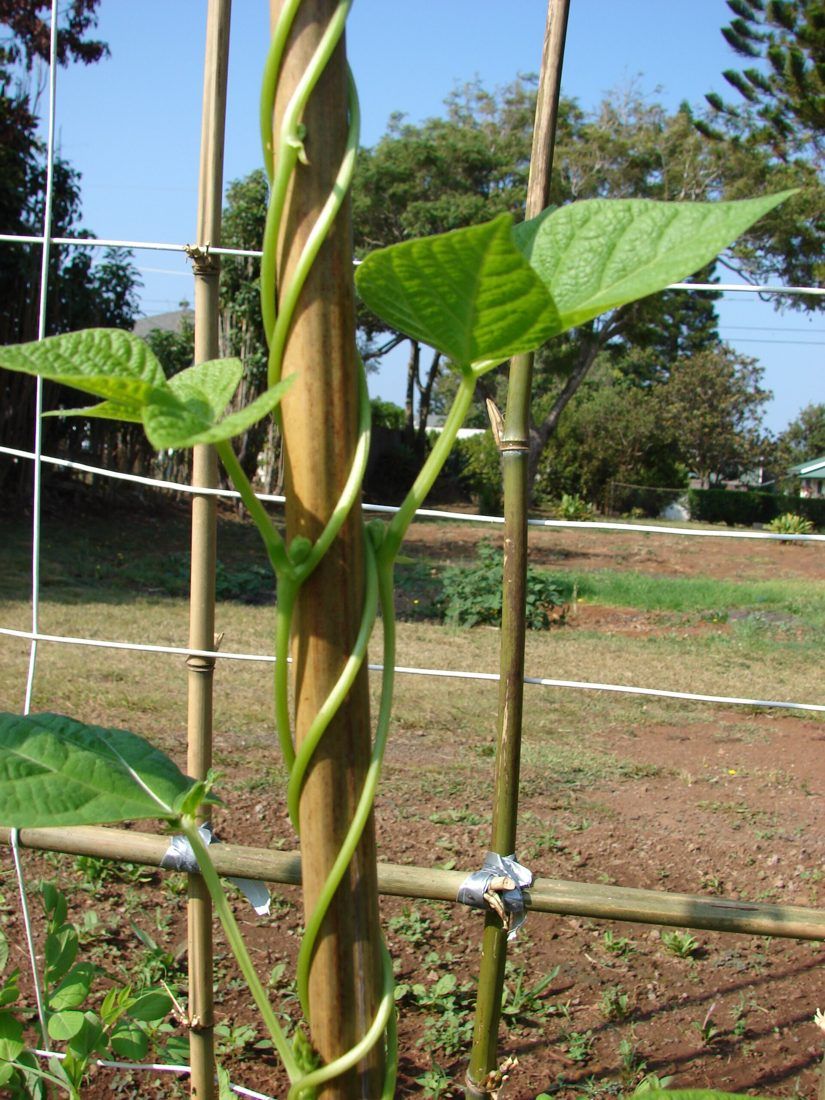
Photo: Forest & Kim Starr, CC BY 3.0, via Wikimedia Commons

- Sun
- Full sun
- Soil
- Fertile, well-drained soil (clay loam is ideal)
- Soil pH
- 6.0-6.5 is ideal; range 5.8-7.0
- Water
- About 1 in per week, moistening the soil about 6 in deep. Most critical while pods develop. Sandy soils need more frequent watering
- Hardiness
- Frost-tender warm-season annual (USDA zones 2-11). Seed rots in cold soil
- Height and spread
- Bush types are low (about 2 ft). Pole types twine 6-8 ft on a trellis. Half-runners about 3 ft

Guv's tipSow bush beans every two to three weeks until late July or early August, and pick the pods young while they're succulent. Lovely.
Through the year
When to plant
Sow direct after frost once the soil is at least 60°F: South Carolina coast Apr 1-Jun 1 (fall Aug 1-Sep 1), South Carolina Piedmont Apr 15-Jul 1 (fall Jul 20-Aug 1), Connecticut mid-late May, Minnesota late May-early Jun. Sow bush beans every 2-3 weeks until late Jul or early Aug
Harvest or flowering
Summer into fall. Pick snap beans young, while the pods are succulent
Pruning
None. Support pole types on a trellis
Making more plants
Seed, sown direct about 1 in deep
Watch out for
Bean leaf beetle
Look for: Small round (shot) holes chewed in leaves; feeding on young plants reduces vigor; pod feeding causes scars/distortion
What to do: Remove plant debris and weedy cover where adults overwinter. In gardens, use floating row covers and remove beetles by hand. Rotate crops
Cutworms
Look for: Young plants cut off at the soil line
What to do: Cardboard/plastic stem collars, hand-pick at night, remove weeds and residue, till before planting; Bt kills young larvae
White mold
Sclerotinia sclerotiorumLook for: Stems rot and wilt; white cottony growth with black sclerotia
What to do: Wider spacing for airflow, avoid overhead watering, rotation
Bean rust
Uromyces appendiculatusLook for: Orange to reddish-brown pustules on leaves
What to do: Disease-free seed, resistant varieties, rotation, remove residue
Always read and follow the label on any treatment, and check it is approved for use where you live.
Safety and spread
Pets and people: Green (snap) beans are safe for dogs, plain, raw or cooked. Raw or undercooked dry seeds (especially kidney beans) contain the lectin phytohaemagglutinin and cause nausea, vomiting and diarrhea (NC State Extension: medium severity; the FDA lists it as a natural toxin). Not listed by the ASPCA
Weed risk: Not on the federal noxious weed list. The USDA PLANTS database shows no federal or state noxious or invasive status
Growing somewhere else? See this plant for the UK and Australia.
The Plant Doctor and the Guv's book
Printable pest and disease charts with real photographs, and all 50 USA plants in one book.