 Guv's Gardens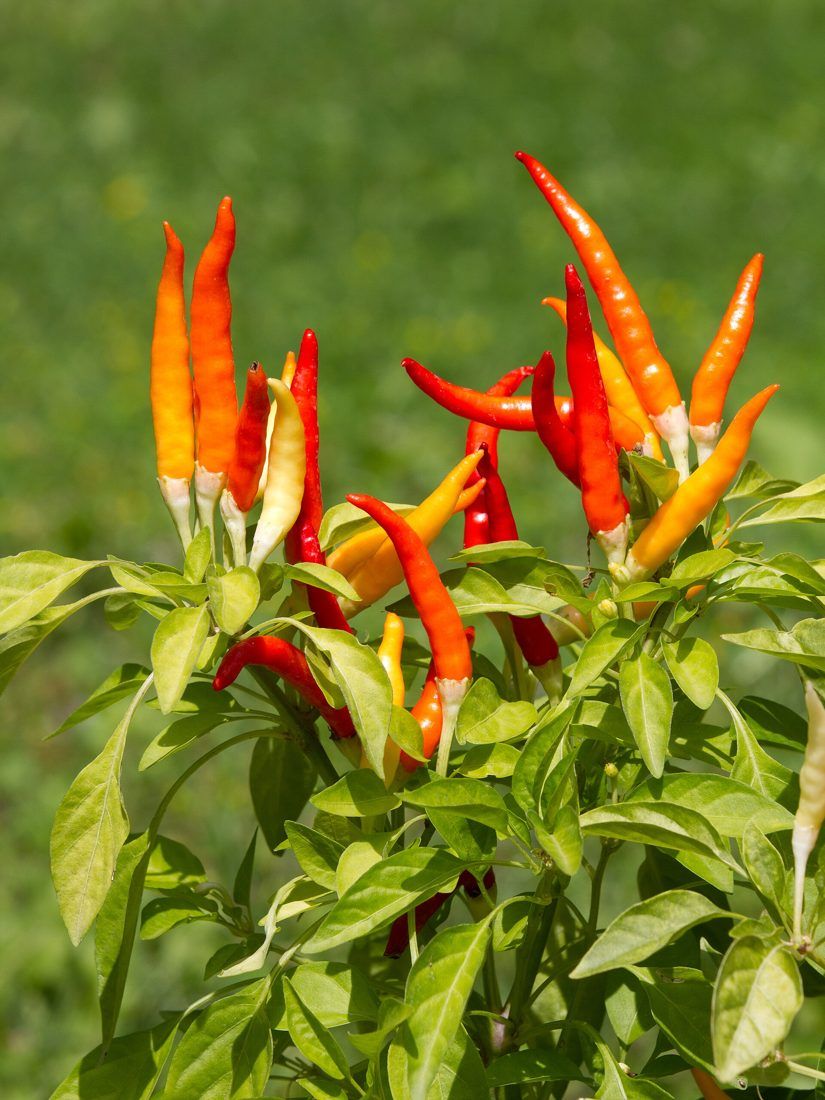
Photo: PierreSelim, CC BY 3.0, via Wikimedia Commons

- Sun
- Full sun.
- Soil
- Well-drained and compost-rich.
- Soil pH
- About 6.0-7.0.
- Water
- Water regularly and keep soil evenly moist; avoid waterlogging.
- Hardiness
- Frost-tender. Grown in all Australian zones as a warm-season crop; can persist as a short-lived perennial in warm, frost-free areas.
- Height and spread
- About 30 cm-1 m, depending on variety.
Guv's tipIn frost-free or mild areas, cut chillies back before winter, leaving some leaves, to carry the plants over. Saves you starting again.
Through the year
Timings are for temperate Australia. Tropical and arid gardens follow different seasons.
When to plant
Temperate and cool areas: spring after frost (Oct-Nov). Warm climates: most of the year; check a local guide.
Harvest or flowering
10-12 weeks after planting; pick green or fully ripe.
Pruning
Little needed. In frost-free or mild areas, cut back before winter, leaving some leaves, to carry plants over.
Making more plants
Seed.
Watch out for
Queensland fruit fly
Look for: Tiny sting or puncture marks on fruit; maggots inside ripening fruit.
What to do: Use exclusion netting or fruit bags, traps, and bait sprays or gels. Destroy infested fruit: bag and freeze for about 2 days, solarise in sealed bags for 14+ days, or boil or microwave.
Aphids
Look for: Clusters of small sap-suckers on new growth; curled leaves; sticky honeydew.
What to do: Hose off, encourage natural predators, or use insecticidal soap or a registered pyrethrum spray.
Blossom end rot
Physiological (calcium uptake and irregular watering).Look for: Sunken dark patch at the fruit tip.
What to do: Water consistently, mulch, and add a calcium-containing soil amendment.
Always read and follow the label on any treatment, and check it is approved for use where you live.
Safety and spread
Pets and people: Not listed by the ASPCA. Hot chillies (capsaicin) irritate the mouth, throat and stomach of dogs - do not feed them to dogs.
Weed risk: Not listed as a weed on Weeds Australia or the Queensland restricted invasive plant list.
Growing somewhere else? See this plant for the UK and the USA.
The Plant Doctor and the Guv's book
Printable pest and disease charts with real photographs, and all 50 Australia plants in one book.