 Guv's Gardens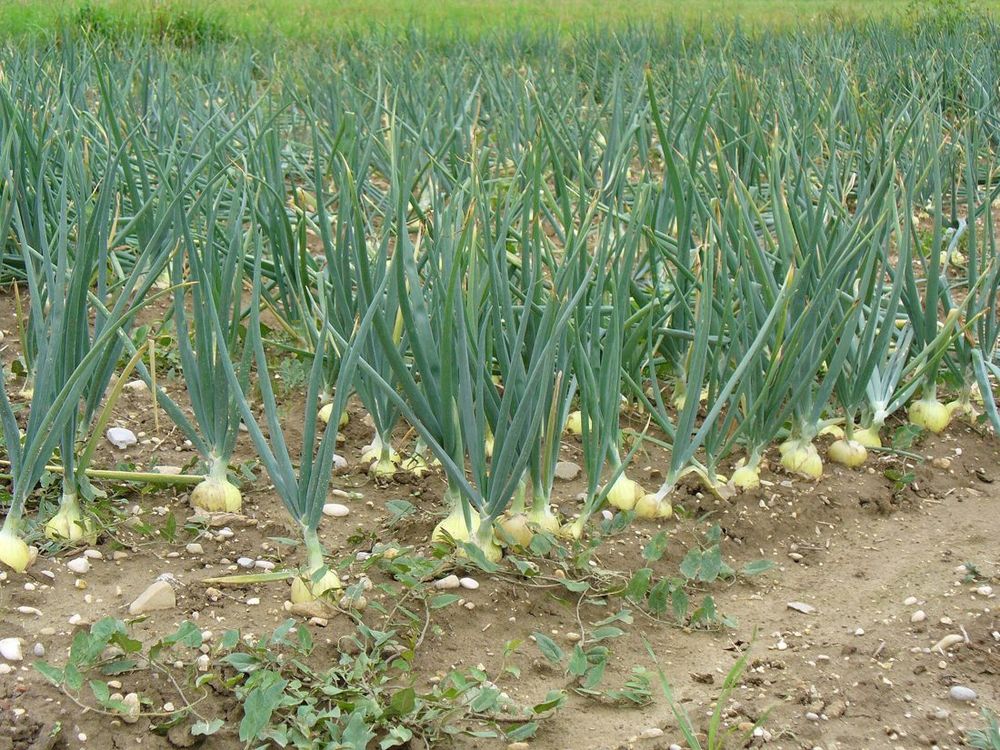
Photo: Rainer Haessner, CC BY-SA 3.0, via Wikimedia Commons

- Sun
- Full sun
- Soil
- Fertile, loose, well-drained soil high in organic matter
- Soil pH
- About 6.0-7.0
- Water
- Keep constantly moist (roots are shallow), about 1 in per week, especially as bulbs enlarge. Stop watering when the tops begin to fall
- Hardiness
- Cool-season crop grown as an annual (USDA zones 5-10). Transplants tolerate light frost
- Height and spread
- About 1-1.5 ft tall x 0.5-1 ft wide; can reach 3 ft x 6-18 in

Guv's tipStop watering onions when the tops begin to fall, and harvest when about half to three-quarters have fallen. Then cure them for 2-4 weeks.
Through the year
Months are a rough guide. Time it by your own frost dates.
When to plant
Early spring, as soon as the soil can be worked (Minnesota Apr-May from seed, sets or transplants). In South Carolina, plant sets Feb-Mar or mid Sep-Oct/Nov; on the South Carolina coast, sow seed mid Sep-Oct
Harvest or flowering
Harvest bulbs when about half to three-quarters of the tops have fallen. Cure for 2-4 weeks
Pruning
No pruning needed. Plants that bolt (send up a flower stalk) form small, thick-necked bulbs that store poorly, so use them first
Making more plants
Seed, transplants or sets
Watch out for
Onion thrips
Look for: Silvery-white blotches/streaks on leaves; stunted bulbs
What to do: Remove crop debris, rotate, monitor with sticky traps; labeled insecticide if severe
Onion maggot
Look for: Maggots tunnel in bulbs; plants yellow and wilt
What to do: Rotate plantings; remove cull onions and debris
Purple blotch
Alternaria porriLook for: Water-soaked lesions becoming purple-brown with yellow margins on leaves
What to do: Well-drained site, rotation, remove debris; labeled fungicide
Botrytis neck rot
Botrytis allii / B. acladaLook for: Soft, water-soaked rot at the neck, mostly in storage
What to do: Harvest in dry weather, cure thoroughly, avoid late nitrogen
Always read and follow the label on any treatment, and check it is approved for use where you live.
Safety and spread
Pets and people: Toxic to dogs, cats and horses (ASPCA): N-propyl disulfide causes vomiting and hemolytic anemia. NC State Extension agrees and rates it low severity for people
Weed risk: Not on the federal noxious weed list. The USDA PLANTS database shows no federal or state noxious or invasive status
Growing somewhere else? See this plant for the UK.
The Plant Doctor and the Guv's book
Printable pest and disease charts with real photographs, and all 50 USA plants in one book.