 Guv's Gardens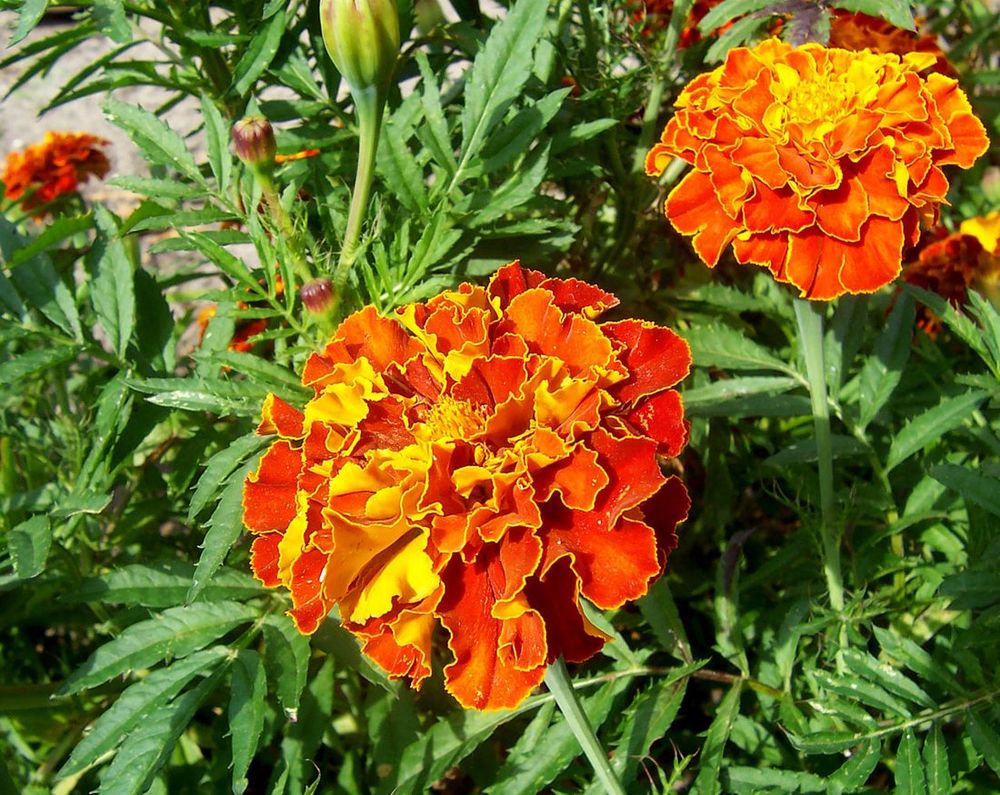
Photo: Unknown, CC BY-SA 3.0, via Wikimedia Commons

- Sun
- Full sun
- Soil
- Well-drained, average soil
- Soil pH
- Prefers 6.0-7.0; accepts 5.5-7.0 and tolerates a wide range. Below 5.5, leaves may bronze from manganese or iron toxicity
- Water
- Moderate, about 1 in per week. Let the soil dry slightly between waterings. Tolerates drought better than wet soil
- Hardiness
- Frost-tender annual, grown in all zones (USDA zones 2a-11b)
- Height and spread
- 6 in-4 ft x 0.5-1 ft, by type (French marigolds 6-18 in; African marigolds to 3-4 ft)
Guv's tipMarigolds tolerate drought better than wet soil, so let it dry slightly between waterings. Deadhead spent flowers to keep them going.
Through the year
Months are a rough guide. Time it by your own frost dates: after last frost (warm season).
When to plant
Transplant or sow direct after the last spring frost, once the soil is about 65°F (start seed indoors 8-10 weeks earlier). The exact month depends on your local frost date
Flowering
Early summer to a hard frost (about May-Oct)
Pruning
Deadhead spent flowers. Pinch young plants to make them bushy
Making more plants
Seed, sown direct or started indoors
Watch out for
Spider mites
Look for: Stippled, bronzed leaves, fine webbing, in hot dry weather
What to do: Forceful water spray to leaf undersides; insecticidal soap or oil
Slugs
Look for: Irregular smooth-edged holes, chewed seedlings, slime trails
What to do: Hand-pick, remove shelter, iron phosphate bait
Gray mold (Botrytis blight)
Botrytis cinereaLook for: Browning flowers covered with gray fuzzy spores in wet weather
What to do: Deadhead and remove infected tissue, avoid overhead watering, space plants
Stem and root rot
Soil-borne fungi or water moldsLook for: Plant collapse in wet, poorly drained soil
What to do: Well-drained soil; avoid overwatering
Always read and follow the label on any treatment, and check it is approved for use where you live.
Safety and spread
Pets and people: Low toxicity. Phototoxic thiophenes in the sap can cause skin irritation or dermatitis when skin is exposed to sunlight. Tagetes is not listed by the ASPCA (its "marigold" entries are Calendula)
Weed risk: Not on the federal noxious weed list
The Plant Doctor and the Guv's book
Printable pest and disease charts with real photographs, and all 50 USA plants in one book.