 Guv's Gardens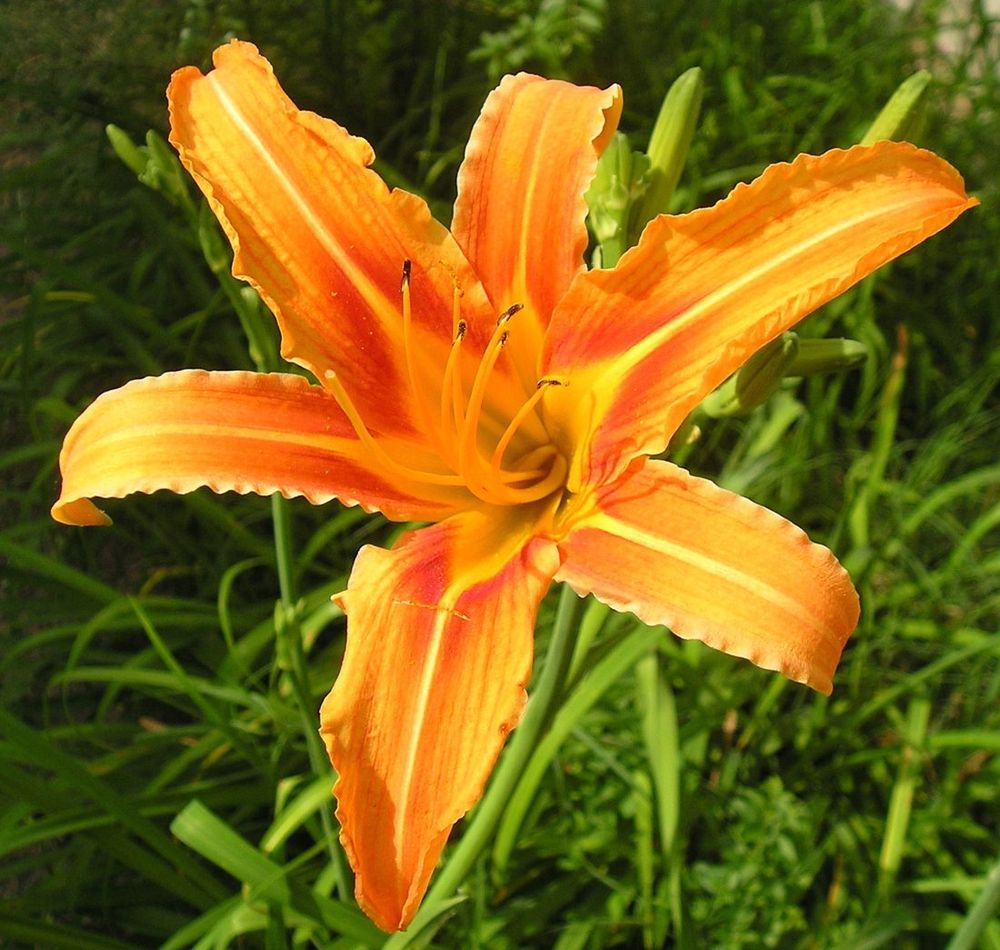
Photo: en:Laineypaige, CC BY-SA 3.0, via Wikimedia Commons
_v2.jpg)
- Sun
- Full sun to part shade
- Soil
- Adaptable; well-drained
- Soil pH
- Adaptable, with no special pH needs; slightly acidic to neutral is preferred
- Water
- Moderate; drought-tolerant once established
- Hardiness
- USDA zones 3-9
- Height and spread
- 1-3 ft x 1-3 ft
Guv's tipDaylilies are toxic to cats and can cause kidney failure, so keep cats well away. Otherwise, deadhead and divide in early spring.
Through the year
Months are a rough guide. Time it by your own frost dates.
When to plant
Plant or divide in early spring, or right after flowering in late summer
Flowering
Late spring to fall depending on cultivar; mainly Jun-Aug
Pruning
Deadhead. Remove flower stalks (scapes) and old foliage
Making more plants
Division
Watch out for
Aphids / thrips
Look for: Distorted buds and flowers
What to do: Hose off; insecticidal soap
Slugs and snails
Look for: Chewed leaves, slime trails
What to do: Hand-pick, iron phosphate bait
Leaf streak
Aureobasidium microstictumLook for: Yellow streaks along midrib turning brown
What to do: Remove affected leaves, avoid overhead watering
Daylily rust
Puccinia hemerocallidisLook for: Orange pustules on leaves
What to do: Resistant cultivars, remove infected foliage
Always read and follow the label on any treatment, and check it is approved for use where you live.
Safety and spread
Pets and people: Toxic to cats (kidney failure). Not toxic to dogs or horses (ASPCA, "Day Lilies"; NC State Extension also flags it as a problem for cats)
Weed risk: Hybrids: none. Orange (tawny) daylily, H. fulva, naturalizes along Southern roadsides and ditches and has invasive status in the USDA PLANTS database. Not a federal noxious weed
The Plant Doctor and the Guv's book
Printable pest and disease charts with real photographs, and all 50 USA plants in one book.