 Guv's Gardens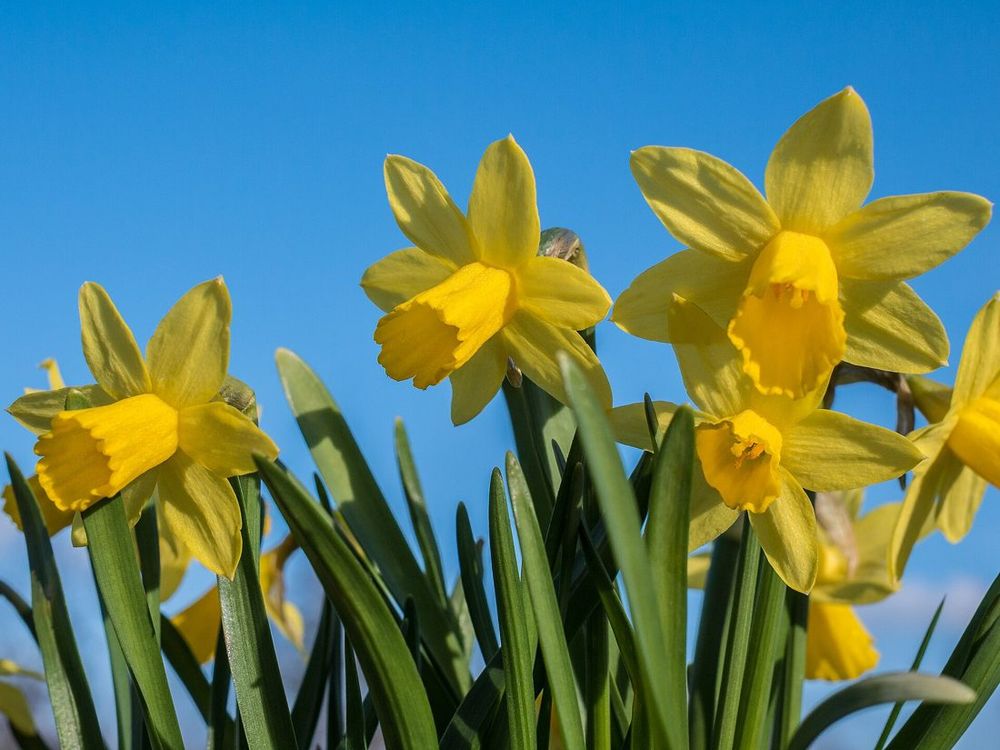
Photo: Uberprutser, CC BY-SA 3.0, via Wikimedia Commons

- Sun
- Full sun to part shade
- Soil
- Well-drained soil
- Soil pH
- Prefers about 6.0-7.0; tolerates acid soil (below 6.0)
- Water
- Moderate in spring
- Hardiness
- USDA zones 4-8; varies by species
- Height and spread
- 6 in-2.5 ft x 6-12 in
Guv's tipDon't mow daffodil foliage early; leave it at least six weeks after bloom, or until it yellows. Discard any soft bulbs, too. Trust me on this one.
Through the year
Months are a rough guide. Time it by your own frost dates: fall planting.
When to plant
Fall (Oct-Nov, mid-autumn)
Flowering
Late winter to spring
Pruning
Leave the foliage for at least 6 weeks after bloom, or until it yellows. Do not mow early
Making more plants
Division of offsets after the foliage dies back (about every 4-5 years when crowded)
Watch out for
Narcissus bulb fly (Merodon equestris)
Look for: Soft, hollow, decayed bulbs; spindly grassy leaves
What to do: Discard soft bulbs
Basal rot
Fusarium oxysporum f. sp. narcissiLook for: Chocolate-brown rot from basal plate; premature yellowing; no flowers
What to do: Discard soft/damaged bulbs, rotate site, good drainage; no home-garden fungicides
Always read and follow the label on any treatment, and check it is approved for use where you live.
Safety and spread
Pets and people: Toxic to dogs, cats and horses. Contains lycorine and other alkaloids, plus calcium oxalate; bulbs are the most poisonous part. Causes vomiting, salivation and diarrhea; large amounts cause convulsions, low blood pressure and heart arrhythmia (ASPCA; NC State Extension: medium severity)
Weed risk: Not on the federal noxious weed list
Growing somewhere else? See this plant for the UK.
The Plant Doctor and the Guv's book
Printable pest and disease charts with real photographs, and all 50 USA plants in one book.