 Guv's Gardens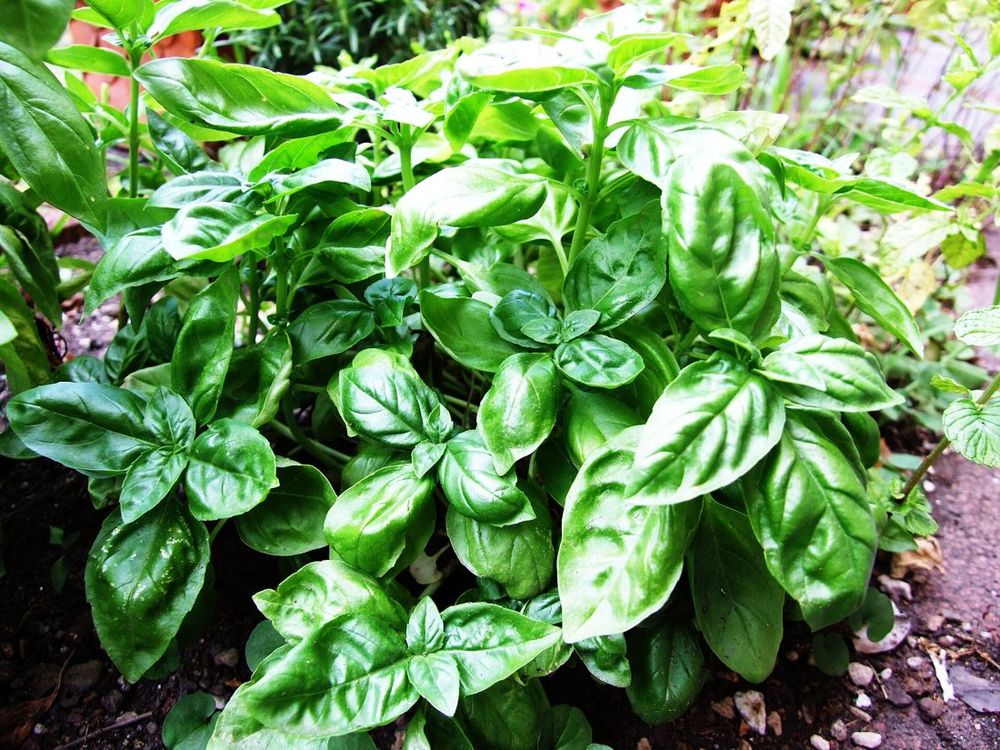
Photo: Castielli, CC BY-SA 3.0, via Wikimedia Commons

- Sun
- Full sun; tolerates part sun (6+ hours)
- Soil
- Moist, rich, well-drained soil with organic matter
- Soil pH
- About 6.0-7.5 (6.0-6.5 suits most advice)
- Water
- Keep evenly moist. Water at the base (drip or soaker hose) rather than overhead
- Hardiness
- Frost-tender annual, killed by the first frost. Perennial only in USDA zones 10-11
- Height and spread
- 4 in-3 ft x 4-14 in (most sweet basils 16-26 in)

Guv's tipPinch basil's growing tips and flower buds to keep it bushy and for the best flavor. Water at the base rather than overhead.
Through the year
Months are a rough guide. Time it by your own frost dates: after last frost (warm season).
When to plant
Transplant after the last frost when days are 70°F or warmer and nights stay above 50°F. Sow seed indoors 4-6 weeks earlier
Harvest or flowering
Harvest young leaves any time once plants are established, through summer until the first fall frost (roughly Jun-Oct, later in the South). Pinch off flower buds for the best flavor
Pruning
Pinch growing tips and flower buds to keep plants bushy
Making more plants
Seed or stem cuttings
Watch out for
Japanese beetles
Look for: Skeletonized, lace-like leaves
What to do: Hand-pick into soapy water
Aphids
Look for: Colonies on shoots; curled, sticky leaves
What to do: Strong water spray; insecticidal soap or neem
Basil downy mildew
Peronospora belbahrii (water mold)Look for: Yellowing limited by major leaf veins, gray-purple fuzz on leaf undersides, later black spots
What to do: Resistant (DMR) varieties, airflow, drip irrigation, remove and destroy infected plants
Fusarium wilt
Fusarium oxysporum f. sp. basiliciLook for: Stunting and wilting at 6-12 in tall, browning of tips, brown streaks on stems
What to do: Resistant cultivars, Fusarium-tested seed, rotate planting site
Always read and follow the label on any treatment, and check it is approved for use where you live.
Safety and spread
Pets and people: Non-toxic to dogs and cats (ASPCA)
Weed risk: Not on the federal noxious weed list. The USDA PLANTS database shows no federal or state noxious or invasive status
Growing somewhere else? See this plant for the UK and Australia.
The Plant Doctor and the Guv's book
Printable pest and disease charts with real photographs, and all 50 USA plants in one book.