 Guv's Gardens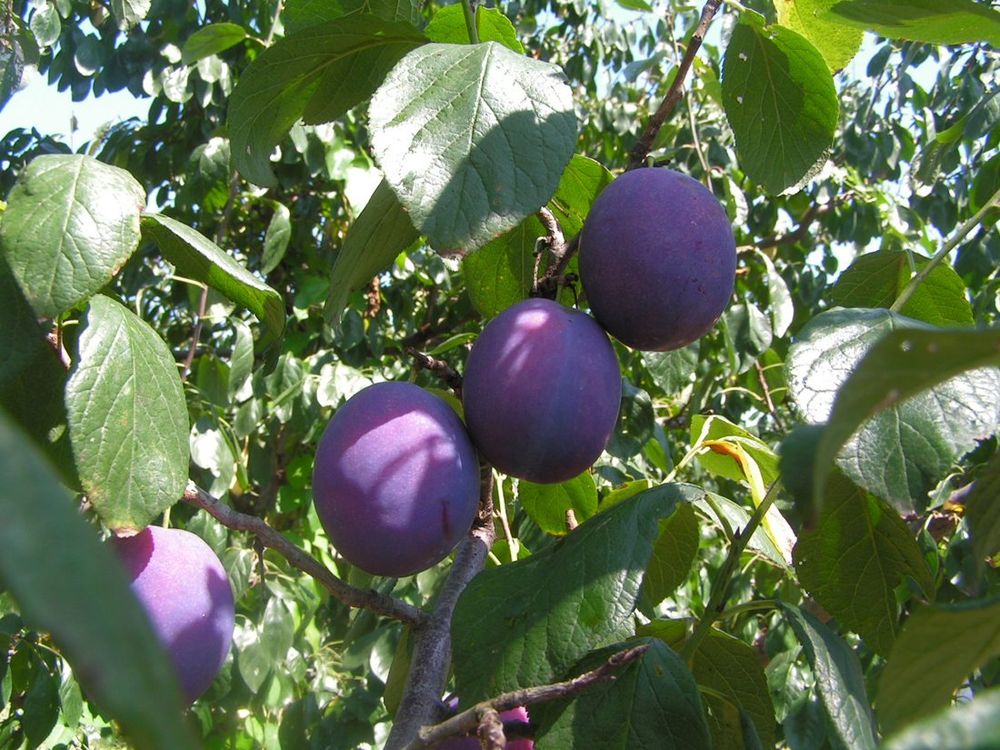
Photo: YAMAMAYA, CC BY-SA 3.0, via Wikimedia Commons

- Sun
- Full sun
- Soil
- Moist, well-drained
- Soil pH
- Around neutral, pH 6.0-7.0 (keep near 6.5)
- Water
- Water in dry spells
- Hardiness
- Fully hardy
- Height and spread
- 3-5m depending on rootstock

Guv's tipOnly prune plums in summer. It avoids silver leaf and bacterial canker. Winter pruning is asking for trouble, believe me.
Through the year
Timings are for the UK as a whole. Northern and exposed gardens often run a couple of weeks later.
When to plant
Plant Nov-Mar (Nov-Feb in some advice)
Harvest or flowering
Harvest Jul-Oct
Pruning
Prune in summer to avoid silver leaf
Making more plants
Chip budding or grafting onto a clonal rootstock, which sets tree vigour
Watch out for
Plum moth
Look for: Pink caterpillars in ripening plums
What to do: Pheromone traps, remove affected fruit
Aphids
Look for: Colonies of small green/black insects on shoot tips, sticky honeydew, distorted leaves
What to do: Squash or wash off, encourage ladybirds and other predators; insecticidal soap if severe
Wasps
Look for: Damage to ripe fruit
What to do: Pick fruit promptly
Bacterial canker
Pseudomonas syringaeLook for: Sunken bark with gummy ooze, shot-holes in leaves
What to do: Prune in summer only, cut out cankers
Silver leaf
Chondrostereum purpureumLook for: Silvery sheen to leaves, branch dieback
What to do: Prune in summer, cut out affected wood
Brown rot
Monilinia spp.Look for: Brown soft fruit with rings of pale pustules
What to do: Remove affected fruit promptly
Honey fungus
Armillaria spp.Look for: White fungal sheets under bark at base, dieback, bootlace rhizomorphs
What to do: Remove infected plants including roots; physical root barriers
Always read and follow the label on any treatment, and check it is approved for use where you live.
Safety and spread
Pets and people: Stems, leaves and seeds contain cyanogenic glycosides and are toxic to dogs, cats and horses, according to the ASPCA. Cats Protection lists Prunus (plum) as 'toxic - caution advised'
Weed risk: None known
The Plant Doctor and the Guv's book
Printable pest and disease charts with real photographs, and all 50 UK plants in one book.