 Guv's Gardens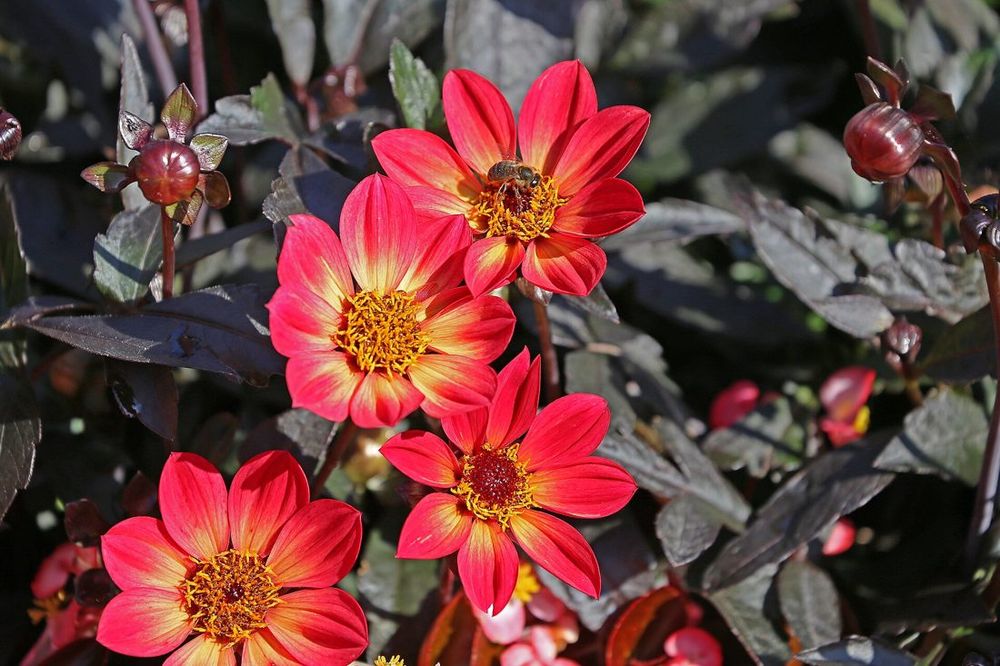
Photo: W. Bulach, CC BY-SA 4.0, via Wikimedia Commons
.jpg)
- Sun
- Full sun
- Soil
- Fertile, well-drained
- Soil pH
- Acid to neutral; also tolerates alkaline soil. Fertile, moist but well-drained soil matters more
- Water
- Water well in dry spells
- Hardiness
- Half-hardy/tender, RHS H3. In most of the UK, lift and store tubers frost-free over winter
- Height and spread
- 30cm-1.8m tall depending on cultivar (about 1m typical); spread 30-90cm
Guv's tipDeadhead dahlias to boost flowering and keep an eye out for slugs and snails. Hand-picking at night works a treat.
Through the year
Timings are for the UK as a whole. Northern and exposed gardens often run a couple of weeks later.
When to plant
Start tubers indoors Mar-Apr. Plant tubers outdoors mid-late Apr to May, and potted or growing plants after the last frost, late May-early Jun
Flowering
Jul to the first frosts (Oct-Nov); some from Jun
Pruning
Deadhead to boost flowering; pinch out tips
Making more plants
Cuttings, division of tubers, seed
Watch out for
Slugs and snails
Look for: Irregular holes in leaves, slime trails, seedlings eaten
What to do: Hand-pick at night, barriers, beer traps, encourage predators; ferric phosphate pellets sparingly
Aphids
Look for: Colonies of small green/black insects on shoot tips, sticky honeydew, distorted leaves
What to do: Squash or wash off, encourage ladybirds and other predators; insecticidal soap if severe
Capsid bugs
Look for: Small ragged holes in young leaves, distorted flowers
What to do: Usually tolerated; clear debris in winter
Earwigs
Look for: Ragged holes in petals and leaves
What to do: Straw-stuffed pot traps
Powdery mildew
Various (Erysiphales)Look for: White powdery coating on leaves
What to do: Water in dry spells, mulch, improve air flow, resistant cultivars
Always read and follow the label on any treatment, and check it is approved for use where you live.
Safety and spread
Pets and people: Mildly toxic: listed as toxic to dogs, cats and horses by the ASPCA, with mild stomach upset and dermatitis. Low severity; tubers and foliage can irritate skin
Weed risk: Not listed as an invasive plant in Great Britain
The Plant Doctor and the Guv's book
Printable pest and disease charts with real photographs, and all 50 UK plants in one book.