 Guv's Gardens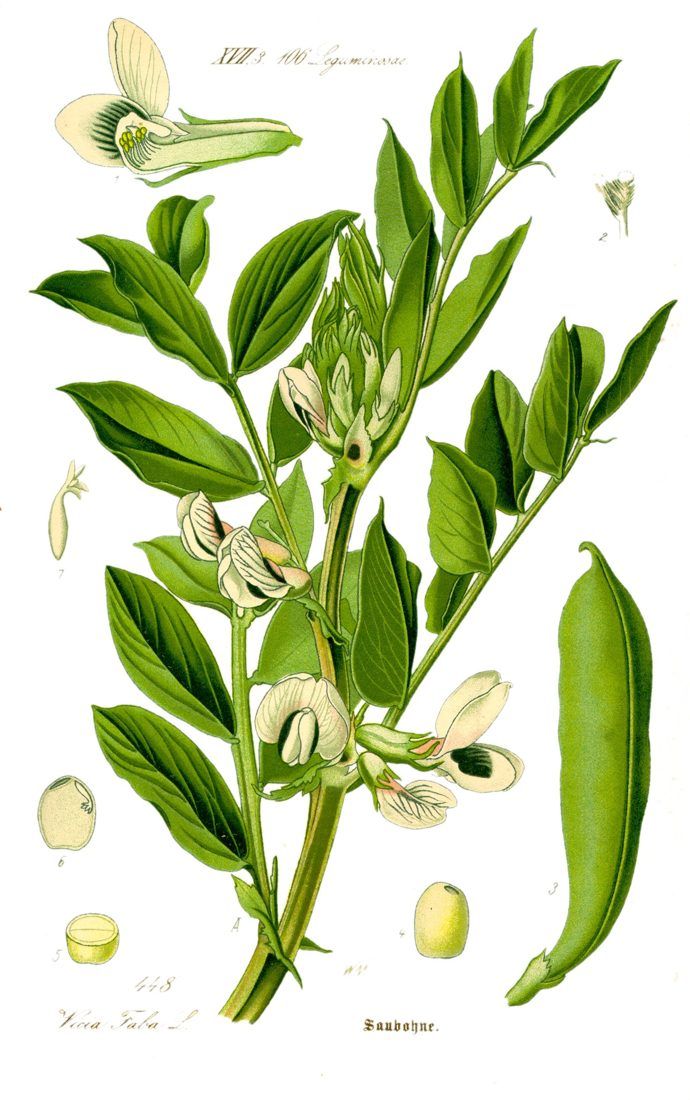
Photo: Unknown, Public domain, via Wikimedia Commons

- Sun
- Full sun
- Soil
- Fertile, well-drained
- Soil pH
- Slightly acid to neutral, about pH 6.0-7.0 (add lime below pH 5.6); tolerates acid, neutral and alkaline soils
- Water
- Water at flowering
- Hardiness
- Hardy (autumn sowings overwinter)
- Height and spread
- 60cm-1.2m
Guv's tipPinch out broad bean tips once pods set, and pinch out any blackfly-infested tips too. Good spacing and drainage keep chocolate spot at bay.
Through the year
Timings are for the UK as a whole. Northern and exposed gardens often run a couple of weeks later.
When to plant
Sow Jan/Feb-May and Oct-Nov. Plant out Mar-May
Harvest or flowering
Harvest May-Aug
Pruning
Pinch out tips once pods set
Making more plants
Seed
Watch out for
Blackfly (black bean aphid)
Look for: Dense black aphid colonies on shoot tips
What to do: Pinch out infested tips, encourage predators, wash off
Pea and bean weevil
Look for: U-shaped notches in leaf edges
What to do: Usually tolerable on established plants
Mice and voles
Look for: Sown seeds dug up and eaten
What to do: Start seeds in modules, traps
Broad bean chocolate spot
Botrytis fabaeLook for: Chocolate-brown spots on leaves and stems
What to do: Good spacing and drainage, avoid excess nitrogen
Always read and follow the label on any treatment, and check it is approved for use where you live.
Safety and spread
Pets and people: Favism: people with G6PD deficiency can develop haemolytic anaemia from eating the beans. Not on the ASPCA list
Weed risk: None known
The Plant Doctor and the Guv's book
Printable pest and disease charts with real photographs, and all 50 UK plants in one book.