 Guv's Gardens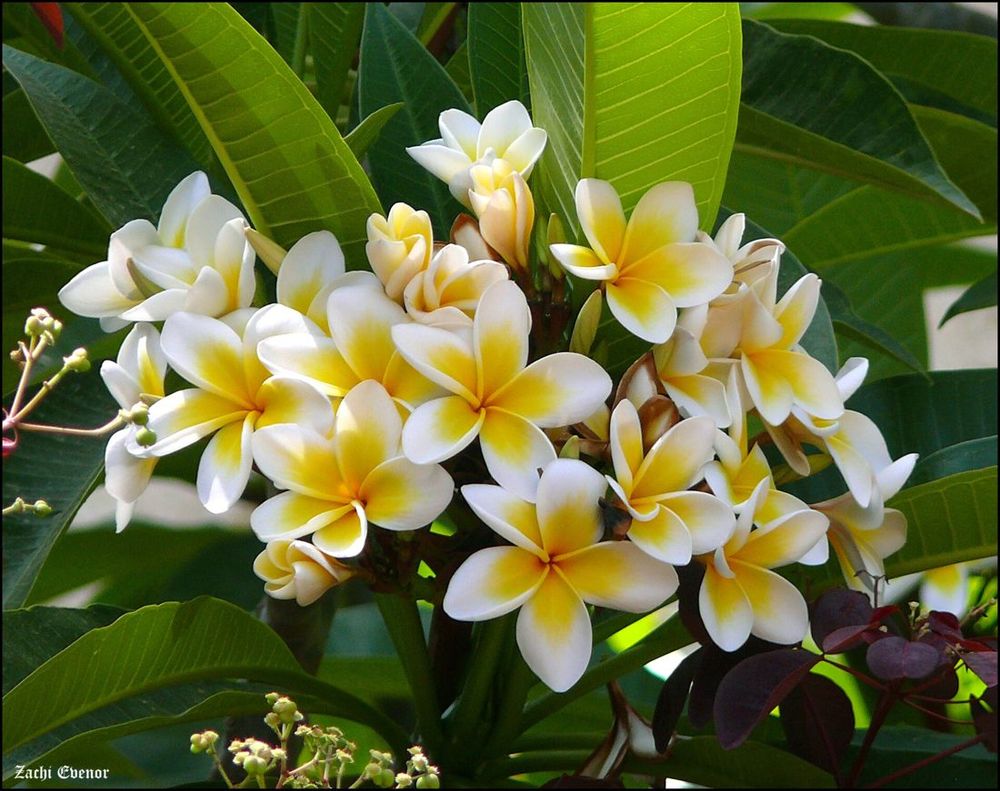
Photo: Zachi Evenor and MathKnight, CC BY 2.0, via Wikimedia Commons

- Sun
- Full sun.
- Soil
- Free-draining; sandy loam is ideal.
- Soil pH
- No specific requirement; adaptable to acid, neutral or alkaline soil. Free drainage is the key requirement.
- Water
- Low.
- Hardiness
- Tropical, subtropical and warm temperate.
- Height and spread
- Usually 5-8 m with a similar canopy; up to 9 m x 5 m unpruned.

Guv's tipTake frangipani cuttings of 10-15 cm or more and let them dry and callus before potting. Mind the milky sap; it's an irritant.
Through the year
Timings are for temperate Australia. Tropical and arid gardens follow different seasons.
When to plant
Spring to early summer, once the soil is warm (also the best time to transplant).
Flowering
Late spring to autumn; roughly Dec-Apr depending on region.
Pruning
Occasional only: remove crossing, dead or unproductive branches. Can be cut back by a third at the end of summer to keep compact. Prune frost-damaged stems back to fresh wood after the last frost.
Making more plants
Cuttings of 10-15 cm or more, dried and callused before potting into free-draining mix (spring); seed is possible.
Watch out for
Scale insects
Look for: White or brown lumps on stems.
What to do: Horticultural spray oil.
Frangipani rust
Coleosporium plumeriaeLook for: Orange pustules or spots under leaves; leaf discolouration.
What to do: Remove and bin infected leaves; use a registered fungicide (e.g. Rose Shield) if needed.
Always read and follow the label on any treatment, and check it is approved for use where you live.
Safety and spread
Pets and people: The milky sap is an irritant and may cause a rash or blistering; eating the sap or bark may cause vomiting and diarrhoea. Considered mildly poisonous and toxic to cats and dogs. Not listed by the ASPCA.
Weed risk: Not listed as a weed on Weeds Australia or NSW WeedWise.
The Plant Doctor and the Guv's book
Printable pest and disease charts with real photographs, and all 50 Australia plants in one book.