 Guv's Gardens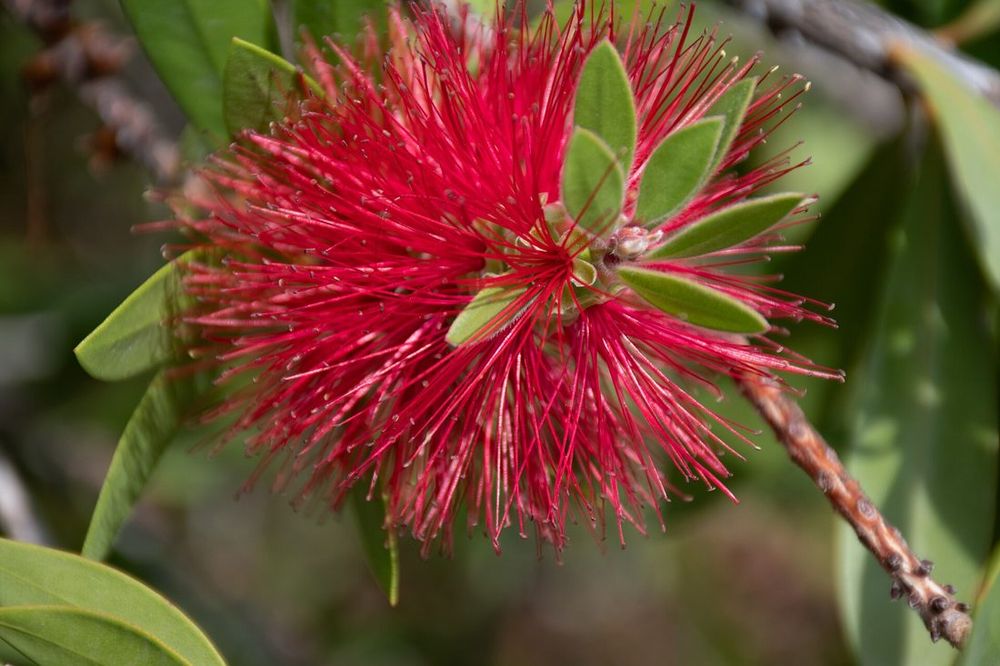
Photo: Vasil Vyagov, CC BY-SA 4.0, via Wikimedia Commons

- Sun
- Full sun to half shade.
- Soil
- Adaptable, including salty soils; best in moist, well-drained, slightly acid soil.
- Soil pH
- Slightly acid.
- Water
- Water regularly until established, then drought-tolerant.
- Hardiness
- All but the coldest regions; only marginally frost-tolerant.
- Height and spread
- About 1-6 m depending on cultivar (e.g. C. citrinus about 3-4.5 m).
Guv's tipBottlebrush copes with salty soils. Prune lightly after flowering, and if it gets straggly, it tolerates a hard prune.
Through the year
When to plant
Any time of year; autumn is generally best for natives, spring in cold, frosty areas.
Harvest or flowering
Spring-early summer, often again in autumn.
Pruning
Prune lightly after flowering; tolerates a hard prune when straggly.
Making more plants
Soft tip or half-hardened cuttings; seed from old woody capsules.
Watch out for
Myrtle rust
Austropuccinia psidiiLook for: Egg-yolk yellow spore masses on new growth, turning red-purple then brown; tip dieback.
What to do: Remove and bag infected growth and avoid spreading spores. Grow resistant selections; use a registered fungicide if severe.
Always read and follow the label on any treatment, and check it is approved for use where you live.
Safety and spread
Pets and people: Non-toxic to dogs, cats and horses.
Weed risk: Not listed as a weed on Weeds Australia or NSW WeedWise.
The Plant Doctor and the Guv's book
Printable pest and disease charts with real photographs, and all 50 Australia plants in one book.